The 40-Year-Old File Format That Still Runs Your World
A Format Older Than the World Wide Web
Think about the oldest thing sitting in your house right now. Maybe it's a cast-iron skillet from your grandma, or a TV that refuses to die. Now imagine that object is also somehow still the industry standard for its job. That's basically the story of the .EXE file.
The executable file format — that little .exe you double-click to install apps, run games, and launch programs on Windows — traces its roots back to the early 1980s. Microsoft introduced it with MS-DOS, the text-based operating system that powered personal computers before Windows even existed. Back then, computers had no mouse, no icons, and definitely no app stores. You typed a command, the .exe ran, and something happened. Simple as that.
Fast forward to 2024, and you're still doing essentially the same thing — just with a double-click instead of a keyboard command. That's a remarkable run for any piece of technology, let alone one that predates the internet as most people know it.
So Why Has Windows Stuck With It?
The honest answer is: because changing it would break everything.
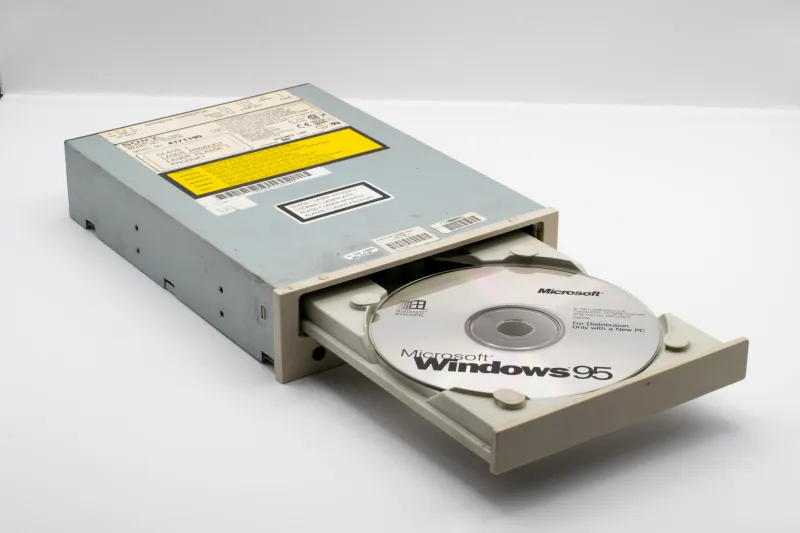
Microsoft has built its entire ecosystem around backward compatibility. That means software written for Windows 95 can, in many cases, still run on Windows 11. Businesses rely on legacy applications — old accounting software, specialized industrial tools, custom-built internal programs — that nobody has the time or budget to rebuild from scratch. If Microsoft suddenly retired .exe support, millions of companies across the US would face a software crisis overnight.
There's also the sheer weight of the developer ecosystem. Hundreds of thousands of software developers know how to build .exe files. The tools, the documentation, the Stack Overflow answers — it's all there. Switching formats isn't just a technical decision; it's a cultural and economic one.
The .exe format itself has evolved significantly under the hood, even if the file extension stayed the same. Modern Windows executables use the Portable Executable (PE) format, which supports 64-bit processing, digital signatures, and security features that the original MS-DOS version never dreamed of. The name is the same, but what's inside has been rebuilt many times over.
The Security Problem Nobody Likes to Talk About
Here's the uncomfortable part: .exe files are also one of the most common vectors for malware in the world.
Because an executable file can run virtually any code on your machine, it's a dream delivery system for viruses, ransomware, and spyware. Cybercriminals disguise malicious programs as legitimate software — a fake Adobe update here, a pirated game installer there — and unsuspecting users click right through. According to cybersecurity researchers, executable files remain among the top methods used to deliver malware to Windows systems.
Microsoft has added layers of protection over the years. Windows Defender, SmartScreen filters, User Account Control (UAC) prompts — these all exist largely because .exe files are so powerful and so easy to abuse. But security experts will tell you that bolting protections onto an inherently open format is a constant game of catch-up.
What's Actually Replacing the .EXE
Here's where things get interesting. The shift away from traditional executables is already happening — most people just haven't noticed.
The cloud took the first swing. Web apps like Google Docs, Figma, and Notion run entirely in your browser. There's nothing to install, no .exe to download. Your software lives on a server somewhere, and your browser is just the window you look through. For tens of millions of Americans, this is already their daily computing reality.
Mobile changed expectations. If you've grown up using a smartphone, you've never installed an .exe file on that device. iOS and Android use entirely different app distribution models — sandboxed, centrally controlled, and far more locked down. Younger users increasingly expect software to just appear after they tap a button, with no file management involved.
Containerization is reshaping enterprise software. In corporate IT and software development, technologies like Docker package applications into self-contained units called containers. These run consistently across different systems without needing to be installed in the traditional sense. It's a fundamentally different model from dropping an .exe on a machine and hoping for the best.
Microsoft's own store model is a quiet pivot. The Microsoft Store delivers apps in the MSIX format, a modernized packaging system with better security, cleaner uninstalls, and automatic updates. Microsoft has been nudging developers toward MSIX for years, even if adoption has been slower than the company hoped.
Legacy Support: The Anchor Keeping .EXE Alive
Despite all these alternatives, the .exe isn't going anywhere soon — and the reason is deeply American in a way. We don't throw things out until they absolutely stop working.
Hospitals run patient management systems built on 1990s Windows software. Manufacturing plants use executable-based control programs that would cost millions to replace. Small businesses across the country rely on niche desktop applications that have no web equivalent. For these users, .exe support isn't nostalgia — it's a business necessity.
Microsoft knows this. The company has explicitly committed to maintaining backward compatibility as a core Windows feature. As long as Windows holds its dominant share of the desktop market — hovering around 70% globally — the .exe file has a guaranteed home.
What Does the Future Actually Look Like?
The most likely scenario isn't a dramatic death of the .exe — it's a slow fade. Over the next decade, more software will move to web and cloud delivery. More enterprise applications will be containerized or rewritten as services. The Microsoft Store will gradually claim more of the software distribution market.
But somewhere in a law firm in Ohio, a logistics company in Texas, or a dental office in Oregon, someone will still be double-clicking a .exe file to open the software that runs their business. And Windows will open it without complaint.
The .exe file is a lot like that cast-iron skillet — old, a little rough around the edges, but stubbornly useful in ways that newer alternatives haven't fully replaced. In tech, that's usually enough to keep something alive for a long, long time.